



Where to Start When Choosing Wood Flooring
Watch the Video Guide
How to choose a wooden floor - Introduction
If you’ve started looking into wood flooring, you’ve probably already hit the same wall most people do. A quick search throws up hundreds of products, unfamiliar terms, and prices that swing wildly for reasons that aren’t obvious. It’s a lot.
I’m Tom, and I’ve worked in our family flooring business for coming up to fifteen years. I’ve spoken to thousands of people at exactly this stage, unsure where to start and worried about getting it wrong. The problem is rarely that there aren’t enough floors to choose from. It’s that without some structure, it’s hard to know what actually matters.
Here’s the framework we talk customers through every day. In short: work out the look you’re drawn to, then check the practical constraints of your space. Get those two things straight and hundreds of options quickly become a manageable shortlist.
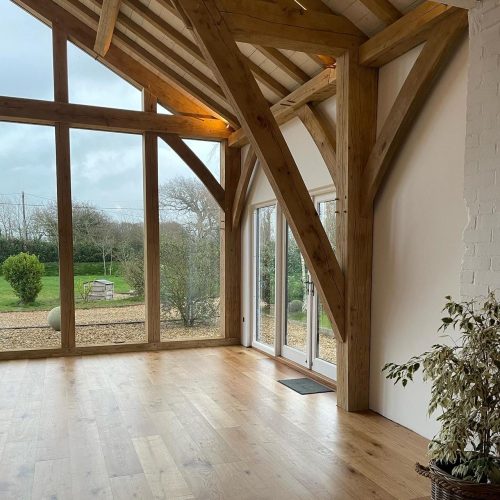
Start with the look, not the product
Before you touch a spec sheet, work out what you’re actually drawn to. Once you can describe that in flooring terms rather than vague impressions, the market narrows fast.
There’s a real difference between “I like the floor in that photo but I don’t know what it is” and “I like a natural oak tone, in long wide planks, with a cleaner grade and fewer knots.” The second version tells a supplier exactly what to show you.
Five things do most of the work here:
- Colour – Wood floor colour isn’t like paint, there’s no shade number to quote. Start by deciding the general direction, pale, natural oak, mid brown, or dark, rather than a precise tone.
- Grade – This is the amount of natural character in the timber, things like knots, grain and colour variation. Grade has nothing to do with quality or durability. It’s a look decision, not a performance one.
- Sheen Level – Matt and natural, or something with more lustre.
- Board Layout – Straight plank, or a parquet style such as herringbone or chevron.
- Board Size – Wide and long boards read as more free-flowing; narrower or shorter boards create a busier pattern. Neither is right or wrong, it depends on the room.
You don’t need firm answers on all five before moving on. Knowing which of them matters most to you is enough to start filtering rather than scrolling.
Check your subfloor and site constraints
Once you’ve got a rough sense of the look, it’s worth finding out what you’re actually installing over, and whether anything rules options in or out before you get near comparing products.
Thickness is usually the biggest one. Some situations set a maximum, doors, thresholds, or a retrofit where there isn’t much build-up height to play with. Others set a minimum, if the floor needs to be fixed to battens or joists rather than a solid subfloor.
If you’re not sure what your subfloor is, or whether thickness could be an issue, ask your builder or installer now rather than later. It takes five minutes and can save you falling for a floor that was never going to work on your project.
Try our free flooring decision tool
We’ve built a free online flooring decision tool that runs through exactly this framework, the visual preferences and the practical constraints, and finishes with a personalised written summary. It won’t hand you a single perfect answer, and it isn’t a replacement for speaking to someone, but it’s a genuinely useful way to bring some structure to your thinking before you get in touch.
Where to go from here
Once you’ve got a feel for the look you want and you understand your site’s constraints, you’re in a completely different position to someone still scrolling through hundreds of options. This is where it’s worth going deeper into finishes, wear layers, structure or grading, on whichever topics matter most to your project. You don’t need to read all of them.
Better still, get in touch. We’re a family-run business that has supplied wood flooring for years, so a quick call or email tends to save a lot of guesswork. Tell us the look you’re after and what you’re working with, and we can point you towards a handful of floors worth sampling.
And samples are the real test. They’re free, and seeing a floor in your own home, in your own light, next to your own furniture, tells you far more than any photo or spec sheet ever will.
A couple of quick answers
If you’re skimming rather than reading the whole thing, these two pull the framework above together.
What’s the fastest way to narrow down wood flooring options?
Get a rough sense of two things before you start comparing individual products: the look you want (colour, grade, sheen, layout and board size) and the constraints of your site (thickness limits and underfloor heating). Between the two, you’ll rule out most of the market without looking at a single spec sheet.
Do I need to have picked my exact floor before I get in touch?
No. Knowing your general direction and any site constraints is enough for a genuinely useful conversation. It’s the difference between asking us to show you everything, and us being able to point you straight at the handful of floors that will actually work for your project.