



Textured wood flooring
Watch the video guide
Textured or smooth? The short answer
Textured wood floors have become really popular over the last few years. Brushed, brushed and oiled, hand-scraped and bandsawn boards have a look and feel that a smooth board can’t match, and in the right setting they look fantastic. Like anything, though, they’re not for everyone.
A textured floor suits you if you love a rugged, natural look and are happy for the floor to pick up character as it ages. If easy cleaning or simple patch repairs matter more to you, a smooth board with a matt finish is usually the more practical choice, and it can look just as natural.
We’re not trying to talk you into texture or out of it. This guide sets out the pros and cons honestly, so you can decide what suits your home and the way you live.
What counts as a textured wood floor?
A textured floor is any board where the surface hasn’t been sanded smooth. The texture is added at the factory, and how deep it goes varies a lot from one product to the next. These are the types you’re most likely to come across:
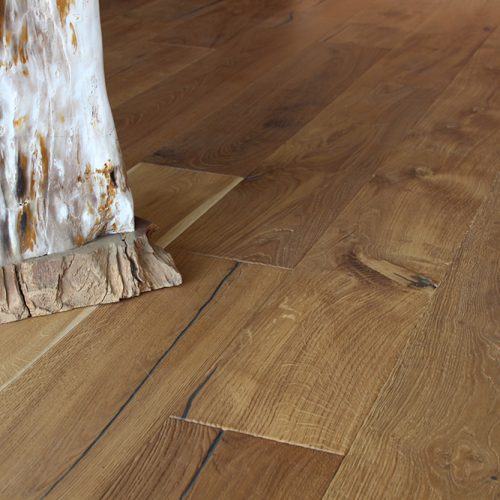
- Brushed – a wire brush runs over the surface of the board and pulls out the softer grain, leaving the harder grain standing slightly proud. Brushing can be light, where you can only just feel it, or heavy, where the texture is deep and obvious.
- Brushed and oiled – a brushed board (as above) finished with oil.
- Hand-scraped – the surface is shaped with a blade or scraper to give a gently uneven look. Visually, the surface of the board is often described as looking ‘wavy’.
- Bandsawn – the face of the board keeps the marks of the saw, which gives a rough-sawn, reclaimed feel.
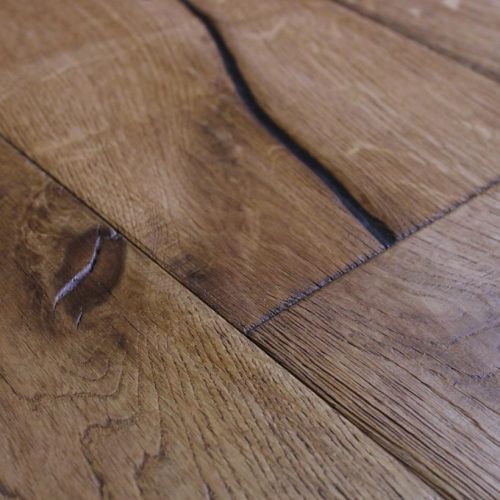
- Distressed – a combination of texture with other aged features and character such as rugged edges, large knots and splits.
Some of the above textured finishes are not featured on our website. We can source hundreds of floors on request, so ask if one of these is the look you’re after.
Texture is also a sliding scale rather than a yes-or-no choice. Some boards come with a very light texture whereas on others it’ll be much deeper and more noticeable.
The advantages of a textured floor
The first advantage is the obvious one, and that’s the look. Brushing in particular draws out the natural grain of the timber and gives the floor more character. A textured board can be said to feel more authentic, and closer to a traditional or reclaimed floor.
Texture can also be forgiving because the surface already has variation in it, everyday scratches and scuffs blend in rather than catching the light the way they can on a smooth board. Some people like the idea that the floor wears into its character over time rather than looking tired.
Then there’s the way it feels. Plenty of people love the tactile nature of a brushed surface underfoot. It can be said to feel more rugged and organic, and less clinical, than a smooth board. That’s personal preference, of course, but it’s one of the main reasons textured floors stay so popular.
Do you need a textured floor to avoid a shiny finish?
A lot of people come to us wanting to avoid a glossy, plastic-looking floor, and assume that means choosing texture. It doesn’t. A board that’s sanded smooth and finished with a matt oil or a matt lacquer can look every bit as natural as a brushed one, just without the texture.
So, if avoiding shine is your main aim, look at the finish before you look at texture. Our guide to choosing a wood flooring finish explains the options and what each one is like to live with.
The disadvantages of a textured floor
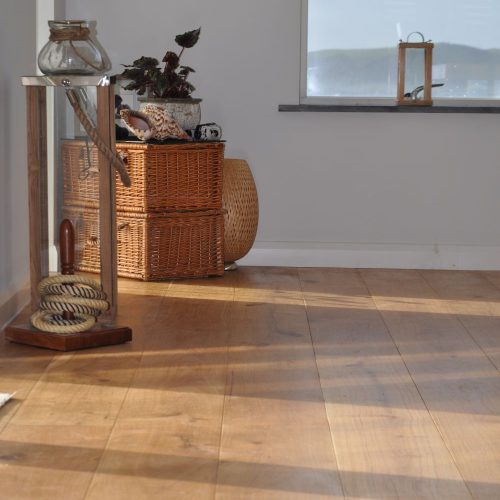
The first disadvantage is cleaning. Texture means more grooves and low points in the surface, and dirt can and will settle in them. A textured floor is harder to clean by its nature. In a lounge or bedroom that may hardly matter. In a kitchen, a hallway or a room you walk into straight from outside, it of course matters more.
This shows most on pale or heavily whitened finishes. The lightest colour tends to sit in the deepest parts of the grain, which is exactly where dirt collects, so in the wrong room those light tones may not stay light for long. Pale textured floors can work well. It’s just worth thinking carefully about which room they’re going in and the nature of the property.
The second disadvantage is repairs. One of the big attractions of a real wood floor is that you have the ability to sand back and refinish later down the line. With a textured board, sanding takes away some or all of the texture. That’s true when you sand a whole room, and it’s also true when you sand a small area to repair it, known as a patch repair. The patch comes up smoother than the boards around it, which make it very hard to blend in. There’s a fair counterpoint here, though. Because texture hides wear so well, many people find they rarely feel the need to patch repair at all. If you’d like to know more about sanding and how long a floor lasts, our guide to how thick your wear layer should be covers it.
Finally, however natural it’s designed to look, a textured finish is made in a factory, and some people find heavily textured boards look less natural than a smooth one. We’ve seen some odd-looking textured boards over the years.
The texture can also vary quite a bit from board to board, which makes a small sample even less reliable than usual. A sample is good for giving you an idea on the colour, the finish and how the texture feels, but it can’t show you how a whole floor will look. Before you commit, see a larger area in person or look at genuine photos of the floor laid. On many of our floors we can send a trial box, so you can see a full selection of boards before ordering, and our showroom in North Devon has larger sections to look at.
Texture often comes paired with more rustic grades, so the character in the wood will also play a big part in the finished look as well. Our guide to understanding the grading of oak floors explains what to expect from each grade.
Is a textured floor right for you?
It really comes down to how you feel about the pros and cons above.
A textured floor is a good choice if:
- you’re drawn to a rugged, organic look and like the feel of texture underfoot
- you’re happy for the floor to pick up marks and scuffs over time, and see them as character rather than damage
A smoother board may suit you better if:
- easy cleaning is high on your list, in a busy kitchen or a hallway by the back door, for example
- you’d like to be able to patch repair small areas more easily
- you’re set on a pale or whitened finish in a room that sees a lot of dirt
- your main aim is avoiding shine, which a matt finish on a smooth board does just as well
Where the floor is going matters as much as the look. A brushed floor that would be perfect in a sitting room can be hard work in a kitchen, and the reverse is just as true for a very clean, smooth board in a cottage full of character.
Looking for a textured engineered oak floor?
Our Lundy range is our most textured floor. It’s wire-brushed throughout, with rugged bevelled edges and a very rustic grade full of knots and splits. It comes in two sizes, 190mm x 20mm with a 6mm wear layer and 220mm x 15mm with a 4mm wear layer, either unfinished or pre-oiled in a choice of colours. The most popular board in the range is the Lundy 190mm x 20mm Engineered Oak.
If you’d prefer a gentler texture, Serenity Brushed and Oiled is a brushed and oiled board in a natural grade, so you get the texture and warmth without being as rustic as the distressed Lundy range.
You’ll find both ranges, and the rest of our floors, on our engineered oak flooring page.
Talk it through with us
The best way to judge texture is to feel it. Order free samples of a textured board and a smooth one, and run your hand across both. It makes the difference much easier to judge than a photo or a description.
Texture is part of the finish decision, and finish is one of the five things that matter most when choosing an engineered wood floor. It makes most sense alongside the other four.
If you’d like honest advice on whether a textured floor would suit your home, call us on 01598 740197 or email info@jfjwoodflooring.co.uk. We’re a family business and always happy to help.
Common Questions
Are brushed wood floors harder to clean?
Yes. Dirt settles in the grooves of the texture, so a brushed floor needs cleaning a bit more often than a smooth one. Pale or whitened brushed finishes show dirt the most.
Can you sand a brushed wood floor?
Yes, but sanding removes some or all of the texture, so a sanded area comes up smoother than the rest of the floor. That makes patch repairs harder to blend in. That said, because texture hides everyday wear so well, many people find no need to patch repair anyway.
Is a textured wood floor less slippery?
Slightly, as the texture adds a little grip. The flooring finish also plays a part though. Some hardwax oils, such as Treatex, are certified for slip resistance even on a smooth board, so if that’s your priority, choose the finish first.