
Watch the video guide
Oak flooring grades explained
What does grade mean? The short answer
Grade describes how much natural character you’ll see in a wood floor. That means the knots, splits, sapwood, colour variation and other features that occur naturally in real timber. Grade has nothing to do with quality or durability. It’s purely about looks.
So what’s the best grade of wood flooring? There isn’t one. A clean Prime grade and a knotty Rustic grade can be equally well made, and neither is better than the other. The right grade is the one that suits your taste, your home and the look you’re after.
The tricky part is that grade names aren’t used consistently, and the things most people rely on to judge grade, a sample through the post or a photo online, can give a misleading picture. This guide covers what each grade looks like, why the names vary between suppliers, and the most reliable ways to choose a grade you’ll be happy with once the whole floor is down.
Grade is about looks, not quality
It’s easy to assume a cleaner grade must be a better floor. It isn’t. How well an engineered floor performs, and how long it lasts, comes down to other things entirely.
The way the board is constructed decides how stable it is. How thick the wear layer is decides how many times it can be sanded and refinished over its life. And the finish decides how it copes with spills, scuffs and everyday wear.
You can get a beautifully made floor in a very rustic grade, and a very clean grade of oak in a poorly made board. When you’re comparing floors, treat grade as a question of style and judge the quality separately.
Why grade names vary between suppliers
Unlike most flooring specifications, grade isn’t governed by one universal standard. There’s no single authority that decides exactly what counts as Prime, Natural or Rustic and each manufacturer and supplier can work to their own internal guidelines.
So the same grade name can look different from one supplier to the next. One company’s Natural grade might look closer to another’s Character grade. Natural is also sold as Classic or ABCD, depending on who you buy from. Some suppliers grade with letters instead, with A the cleanest, so an ABCD floor would consist of varying boards – some being cleaner and some containing more character.
Despite being confusing, grades are still a really useful guide to how much character to expect, particularly when you’re comparing floors from the same supplier. Just be careful about comparing grade names across different suppliers as if they mean the same thing.
Here are the grades you’ll come across most often, from the cleanest to the most rustic:
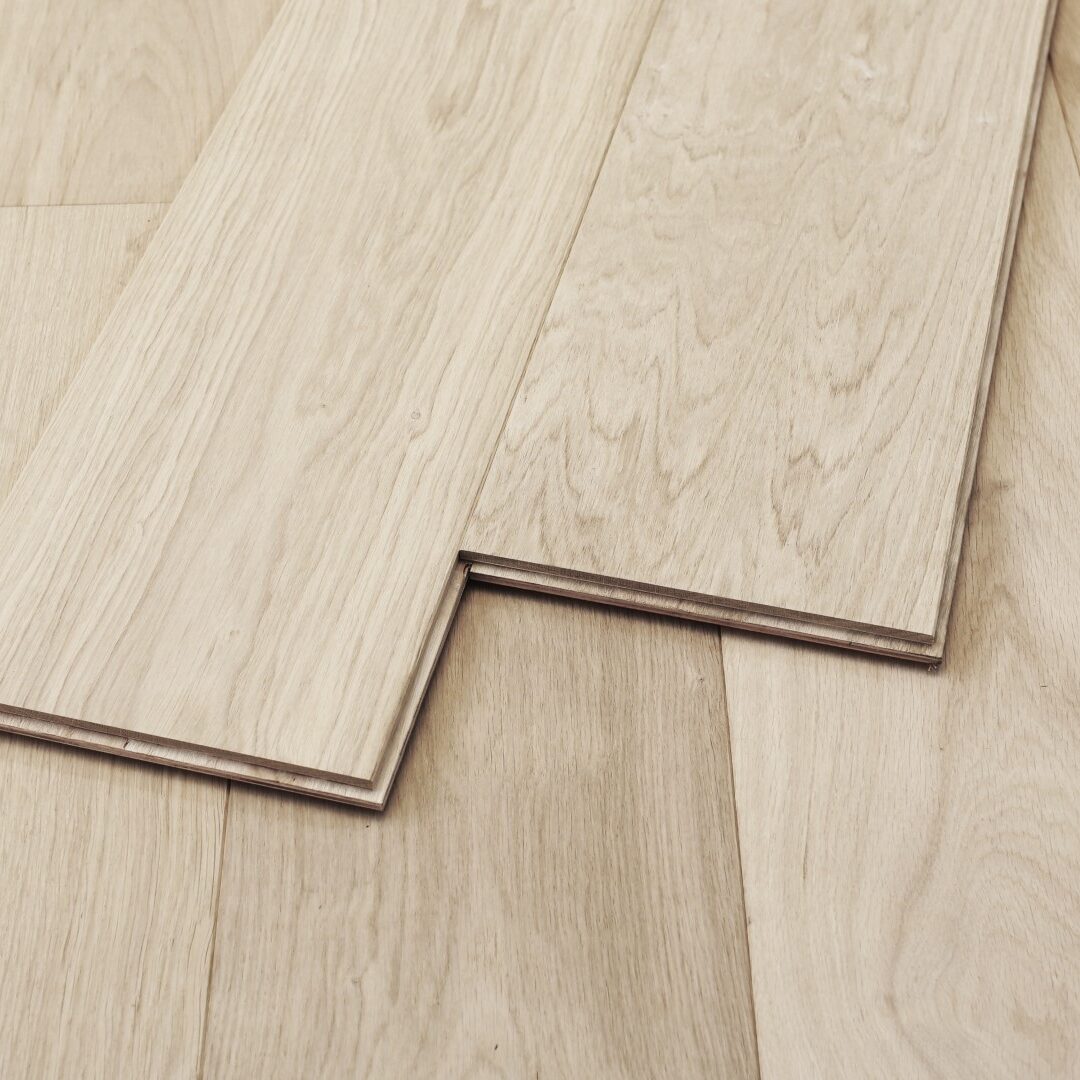
Prime grade
Prime grade, or AB grade, sits at the cleanest end of the scale. The boards have very few knots, less colour variation and a more uniform look overall. It’s usually chosen where a refined, consistent look is wanted, and it sits well in contemporary and minimalist interiors.
Colour will still vary a little from board to board, because oak is a natural product, but much less than in the grades below.
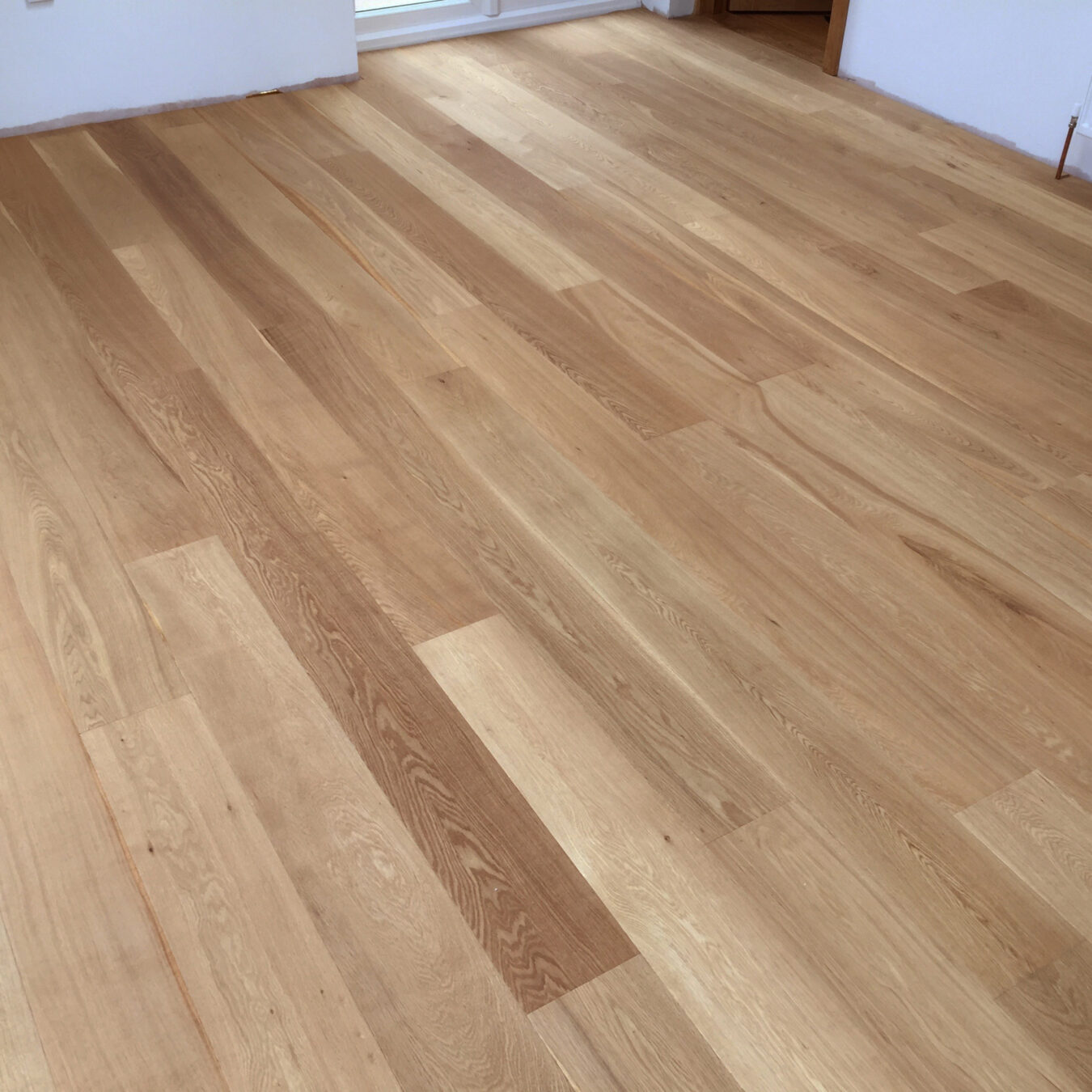
Select Grade
Select grade is still relatively clean, but with more colour variation and character Prime. Any knots are usually small, adding a touch of character without taking over the floor. It’s a good choice if you want a calm, fairly even look that still clearly reads as real wood.
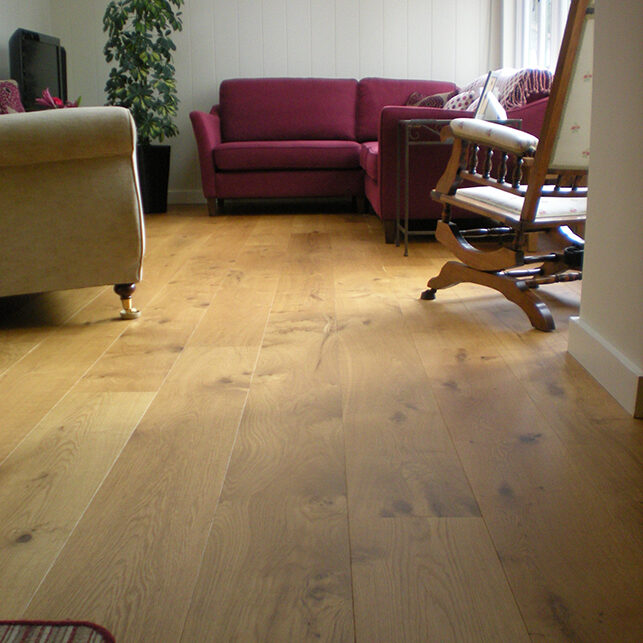
Natural Grade
Natural grade, sometimes sold as Classic or ABCD, sits in the middle of the scale. It has a noticeable amount of character, with knots and grain variation, but without tipping over into rustic. It’s often described as the “happy medium”.
It’s also the most popular grade we sell, because it suits so many different homes, from period cottages to new builds. If you like the warmth of a traditional timber floor but don’t want it to feel too busy, this is usually where to start.
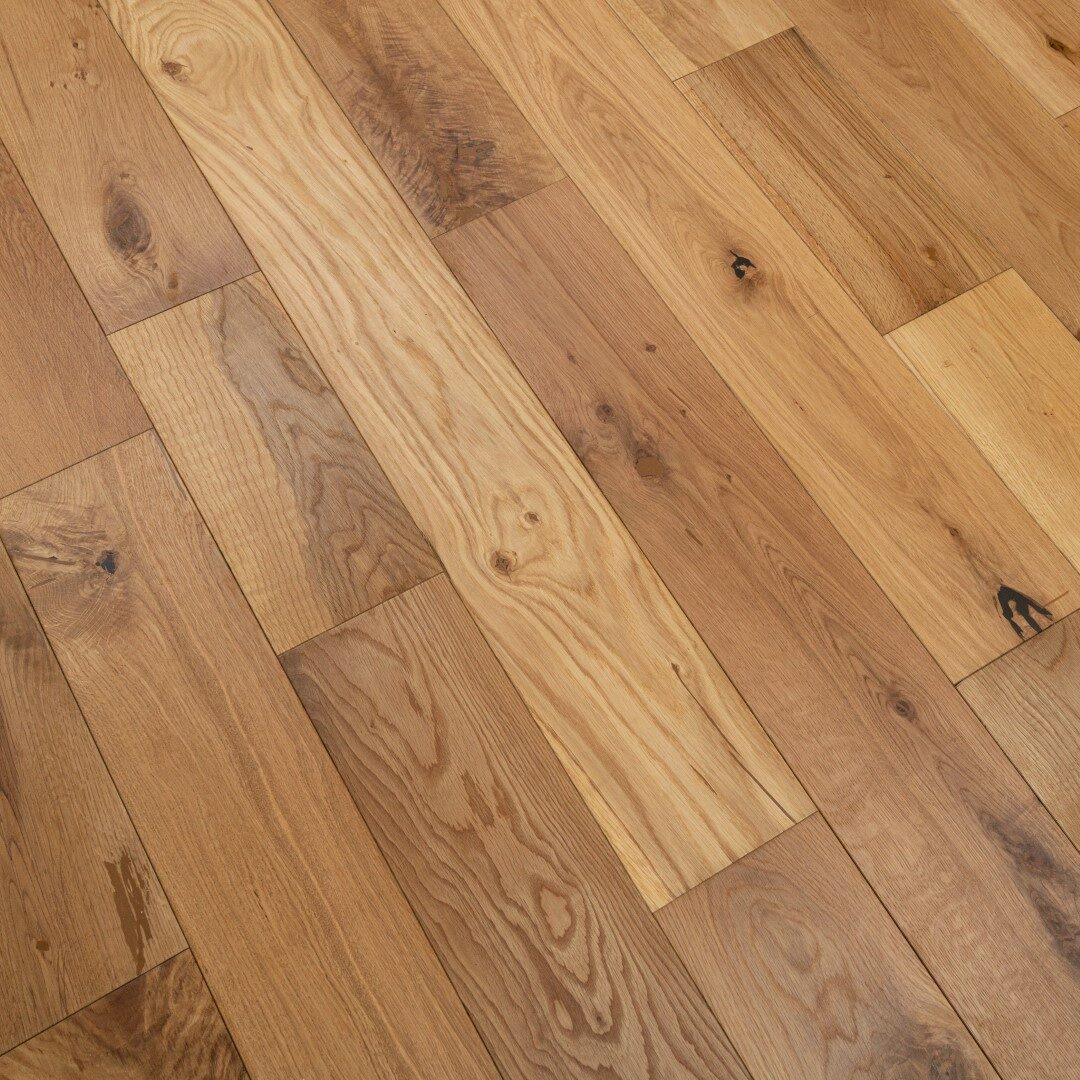
Character and Rustic Grade
Character and rustic grades celebrate the natural imperfections of the timber. Expect larger and more frequent knots, splits, sapwood, mineral streaks and more colour variation from board to board, with the larger knots filled.
The result is a warm, traditional floor that’s popular in cottages, barn conversions and farmhouse kitchens. A rustic floor can look just as good in a modern space, though, if you want some contrast against clean lines.
Antique or Distressed Grade
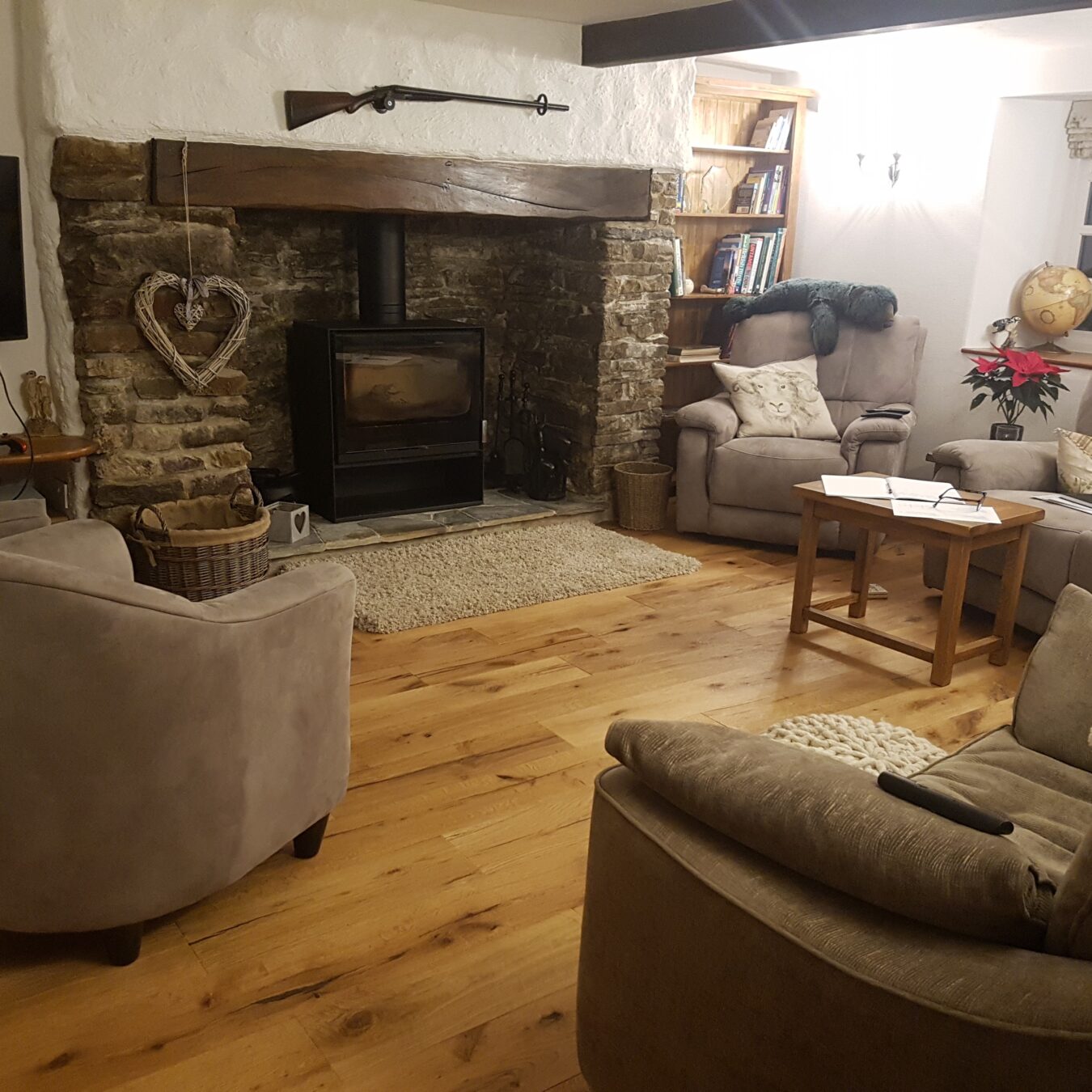
Distressed floors go a step further than rustic. As well as a lot of natural character, with large filled knots and splits, the surface is deliberately worked to look aged and weathered, often with brushing and rugged edges. The aim is the look of reclaimed or antique timber.
Because a distressed floor is textured as well as characterful, it’s a good idea to read up on the pros and cons of a textured floor before you commit, particularly around cleaning and repairs.
Don't overlook the knot filler
Most oak floors with any character have their knots filled during manufacture. Good quality engineered oak comes with the knots pre-filled, so they aren’t rough underfoot and don’t collect dirt. It makes the floor smoother and easier to live with.
What a lot of people don’t realise is that fillers don’t all look the same, and the filler can have almost as much effect on the look of a floor as the knots themselves. Some fillers stand out and exaggerate every knot. Others blend quietly into the timber around them.
In our Supreme and Classic ranges we use a sawdust-based filler. It has a natural, brown, slightly granular look, compared with putty-based fillers, which tend to look more solid and flat in colour.
We’ve had plenty of customers who thought they wanted a cleaner grade, when it turned out that what they didn’t like was the filler they’d seen in other floors. With a subtler filler, a natural grade floor with character often suits them far better. If you like the idea of knots but don’t want them to look jarring, a sawdust-based filler is well worth looking for.
A sample won’t always show you the filler. It may have no knots in it at all, even if it’s cut from a rustic floor. If you’d like to see what the filler looks like, just ask and we’ll happily send you a sample with a filled knot in it.
Why a sample can't show you the grade
Samples are a really useful part of choosing a floor, and we’d suggest everyone sees one before they buy. They’re the best way to judge the quality, thickness, wear layer, sheen, colour and texture of a floor.
What they can’t do is show you the grade. A sample is a small offcut, and even the most rustic floor has sections with no character at all. We often hear people say they prefer one sample over another because it has a knot they love. It doesn’t work like that. No two boards are the same, which is a big part of the appeal of real wood, so the next sample from the same floor could look nothing like it. Judge grade from a sample and you’re setting your expectations on far too small a snapshot.
Why genuine photos beat CGI and AI images
The best way to judge grade is to look at genuine photographs of installed floors. Real photos, even unstyled ones taken on a phone, show far larger areas of flooring than a sample, and give you a much better idea of how much character and variation to expect across a whole room. Screens aren’t always accurate on colour, but photos are very good at showing knots, sapwood and variation.
Be wary of CGI and AI-generated images. They can look very appealing, with the perfect room and the perfect light, but they can also be inaccurate and misleading about what the floor really looks like. A genuine photo of an uninspiring, empty room tells you far more than a perfect room that doesn’t exist.
A simple rule of thumb: if you see the same knot more than once in an image, it’s not a genuine photograph.
That’s why we show real photos of our floors wherever we can. If you’re weighing up a particular floor, ask us and we’ll point you to photos of it where we have them.
Try a box, or come and see us
On many of our floors, you can try a single box before you commit to a full order. Just give us a call to arrange it. Laying out a box of full-length boards in your own room gives you a far clearer idea of the grade than any sample can.
You can also see the floors in person. Our showroom in North Molton, Devon lets you see much larger areas of flooring, and customers travel from all over the country to visit. We’re on the edge of Exmoor, ten minutes from the moors and around half an hour from the North Devon coast, so some people make a short break of it. Appointments can be booked through the website or by giving us a call.
Taste, budget and the style of your home
Your own taste matters most. Some people love the authenticity of knots and variation, while others prefer a cleaner, calmer look. Neither is right or wrong.
Budget plays a part too. Cleaner grades cost more because the timber needs more selecting to find boards with few knots, whereas rustic boards need less selection and are more affordable.
Then think about the style of your home. Prime and Select grades suit modern, minimalist spaces, and Natural, rustic and distressed grades sit naturally in traditional and farmhouse settings. That’s a guide rather than a rule, though. A natural oak floor with knots and character can bring real warmth to a modern home.
Talk it through with us
Order free samples to check the quality, colour and finish, then use genuine photos, a trial box or a showroom visit to judge the grade. Grade is one of the five things that matter most when choosing an engineered wood floor, so weigh it up alongside the others. You’ll find our full range on our engineered oak flooring page.
We’re a family-run business, and we’re always happy to talk things through. If you’d like a second opinion on which grade would suit your home, or want to see a filled knot before you decide, call us on 01598 740 197 or email [email protected].


Common questions
Does a lower grade mean lower quality?
No. Quality comes from the construction of the board, the materials used and the accuracy of the machining. You can get a very well made floor in a rustic grade, and a clean grade in a poorly made board. Grade and quality are two separate things.
Does grade affect how durable a floor is?
Not directly. Day-to-day durability comes mainly from the finish.
Are cleaner grades more expensive?
Generally, yes. Prime and Select boards take more selecting, so they cost more than Natural or rustic grades. The construction, board width and wear layer thickness also affect the price.
Can I judge the grade from a sample?
Not reliably. A sample is too small to show how much character a whole floor will have, and even a rustic floor has clean sections. Use samples for quality, and to get a feel for colour and finish, then look at genuine photos, try a box, or visit a showroom to judge the grade.
