



Wear layer on engineered wood flooring
Watch the video guide
What is a wear layer on engineered wood flooring?
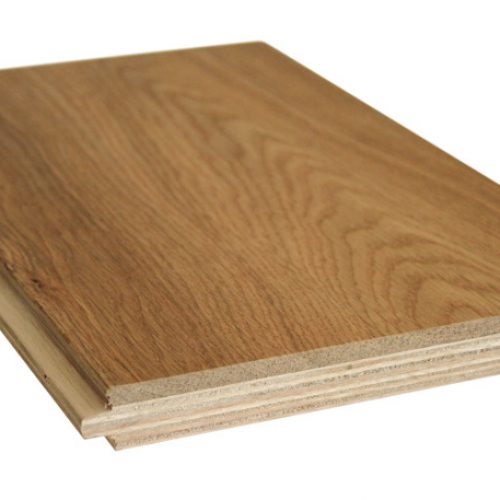
The wear layer is the solid hardwood that sits on top of the multi-ply core of an engineered wood floor. It’s the part you see and walk on, and the part you sand back when the time comes. It’s measured in millimetres and counts towards the overall thickness of the board, so a 21mm board with a 6mm wear layer is 21mm thick in total, of which 6mm is solid oak.
The short answer to “which wear layer is best?” is that there isn’t a single best one. First check what board thickness your property allows. Then choose based on how busy the room is and what you want to spend. Any hardwood floor with a good finish will last for decades if it’s looked after.
Wear layers range from as thin as 1mm up to 6mm. A thicker wear layer means the floor can be sanded more times, so it lasts longer overall.
A quick tip for reading specifications: the wear layer is often shown after the overall thickness. A board listed as 21/6mm is 21mm thick with a 6mm wear layer. The first number is the overall thickness of the board and the second is the hardwood top layer you can sand.
Solid wood flooring has a limit too. Although the board is solid all the way through, it can only be sanded down as far as the tongue and groove. On an 18mm solid oak board, the distance from the top surface to the top of the tongue is around 6mm. So an engineered board with a 6mm wear layer, such as our ‘Supreme’ range, has the same sanding life as a solid oak floorboard.
Is a thicker wear layer more durable?
This is one of the most common misconceptions we hear. More hardwood does mean more hardwood to sand through, but the thickness of the wear layer has nothing to do with how hard-wearing, stain resistant or practical the floor is from day to day. Whether that layer of oak is 1mm or 6mm thick, you’re still walking on the top surface, and a spilt glass of red wine still lands on the top surface.
Scratch resistance, water resistance and how easily you can patch repair a damaged area all come down to the finish. We’ve covered that in its own article on choosing a wood flooring finish, and it’s worth reading alongside this one.
How long does a wear layer last?
The thicker the wear layer, the more times the floor can be sanded. How long a floor lasts before it requires sanding at all depends on what it’s treated with and how you look after it. Even a 2–3mm wear layer will last decades if it’s finished and maintained properly.
Plenty of our customers go well over 10 years between sands. Say you choose a floor with a 3mm wear layer, sand it every 10 years and take off about 1mm each time – that’s still around 30 years of floor.
So before you buy, think about how durable the finish you’re buying or applying will be, and make sure you know how to clean and maintain it. This matters most in the busier rooms of the house. In time the finish will wear, and being able to replenish it rather than sand the whole floor makes a real difference.
Many of our customers treat their floor with Treatex hardwax oil once it’s been laid. It gives a durable finish that’s easy to clean, maintain and replenish. It’s a product we stand by, and so do the many people who’ve used it.
What wear layer does your property need?
Board thickness and wear layer go hand in hand. The thicker the board, the thicker the wear layer tends to be. Our 14mm thick ‘Country’ range has a 3mm oak wear layer, for example, while our 21mm thick ‘Supreme’ range has 6mm. You’ll never find a very thin board with a very thick wear layer, and it’s rare to find a very thick board with a very thin one.
That matters because your property may decide the thickness for you, and with it the range of wear layers on offer.
- Your subfloor – if the floor has to span joists or battens, your engineered wood board needs to be structural, and anything thinner than 20mm engineered oak won’t be suitable. Boards of 20mm or 21mm usually come with at least a 4mm wear layer. If you’re laying onto a solid surface such as concrete, plywood or chipboard, you’re not restricted, because the subfloor is carrying the load.
- Underfloor heating – some systems set a maximum floor thickness. If yours is capped at 15mm, you’re likely to be looking at a 4mm wear layer or less. Our guide to choosing a wood floor for underfloor heating covers what to check.
- Floor heights and doors – if your internal doors are already hung and you’d rather not trim them, or the new floor meets tiles or carpet and you want to keep the step between them small, a thinner board may suit better. If you can’t go thicker than 15mm, a 6mm wear layer is off the table.
If any of these apply, sort them out first. They can narrow your choice before you’ve looked at a single sample.
How to choose if your property doesn’t limit you
If nothing on site restricts you, the choice comes down to how long you want the floor to last and how much you’re looking to spend. Generally speaking, the thicker the wear layer the better, but that doesn’t make 6mm a necessity at home.
Think about the room. A busy family kitchen in the house you plan to stay in may well justify a thicker wear layer. Whereas a 6mm wear layer in a spare bedroom that’s used a few times a year could be considered overkill.
Then look at the cost. Compare the price of, say, a 4mm and a 6mm wear layer across your whole floor. Some people decide an extra few hundred pounds is worth it for the thicker layer and the peace of mind. Others decide 4mm is plenty and put the saving towards a tougher finish. Both are sensible choices.
To pull it together:
1. Check whether your site sets a minimum or maximum board thickness. If it does, that will largely decide your wear layer.
2. Think about how busy the room is and how long you intend to stay in the property for.
3. Don’t forget the finish. That’s what decides how practical the floor is to live with and look after.
4. Weigh up the price difference against your budget.
Wear layer is one of the five things that matter most when choosing an engineered wood floor, and it makes most sense alongside the other four.
Talk it through with us
Whichever wear layer you choose, a hardwood floor with the right finish will give you a floor that looks good and lasts. If you’re weighing up two thicknesses, order free samples of both. Seeing the boards side by side makes the difference much easier to judge than a specification sheet.
If you’d like to talk about your property and which board would suit your home best, call us on 01598 740197. We’re a family business and always happy to talk through your particular requirements.
Common Questions
Is a 6mm wear layer as good as solid oak?
For sanding life, yes. A solid oak board can only be sanded down to the top of its tongue, which on an 18mm board is roughly 6mm. An engineered board with a 6mm wear layer gives you about the same, with the added stability of a multi-ply core underneath.
How long will a 3mm wear layer last?
Decades. If you sand every 10 years and take off about 1mm each time, a 3mm wear layer gives you around 30 years, and many floors go well over 10 years between sands. How often you need to sand depends more on the finish and how you care for the floor than on the wear layer.
What wear layer do I need for underfloor heating?
The heating doesn’t care about the wear layer itself. What matters is the overall board thickness, because some systems set a maximum. If yours is capped at 15mm, you’ll most likely be choosing from boards with a 4mm wear layer or less. All of our engineered floors are suitable for underfloor heating, and our underfloor heating guide explains what to check with your system.