



Engineered Wood Flooring Construction
When comparing engineered wood floors, it’s natural to start with the oak on top: the colour, the grade, the sheen level, the texture. Fair enough, that’s the part you look at every day. But the layer you can’t see, the core underneath, is in fact doing the hard work when it comes to strength and stability. It’s what separates a floor that stays flat, and feels solid, from those that feel lightweight and are more likely to move.
The short version: an engineered board is built up from layers, and the way that core is made, not the oak / walnut on the surface, is what decides how stable and reliable your floor will be. It’s also one of the easiest things to overlook when you’re comparing products online, because it barely shows up in a photo.
Here’s what’s actually going on underneath, and why it’s worth caring about.
What an engineered board is actually made of
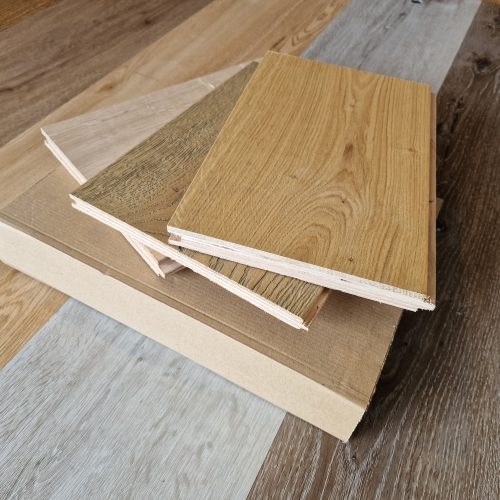
An engineered wood floor isn’t a solid plank of timber. It’s built up in layers: a solid hardwood wear layer on top (the part you see, walk on, and can sand back over the years) bonded onto a core of several more layers beneath.
That layered build is a good thing. It’s exactly what makes engineered wood more stable than solid timber and suitable over underfloor heating, because the construction resists the natural movement that wood goes through as temperature and humidity change across the year. But not all cores are built the same way, and that’s where the real quality difference lives.
3-ply and multi-ply, and why it matters
You’ll mainly come across two types of core.
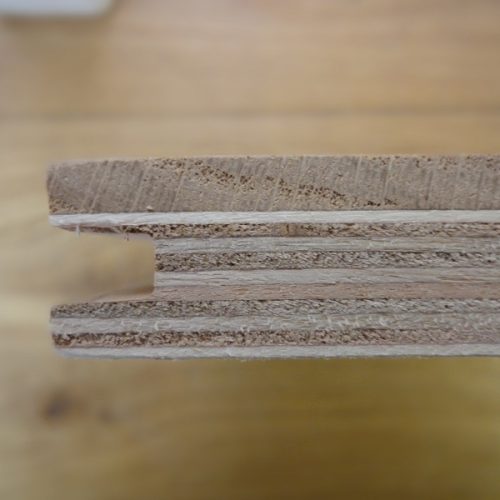
• 3-ply – three layers in total: the hardwood wear layer on top, a middle layer, and a backing layer. The name has “ply” in it, but this isn’t the same as a true plywood core. Three layers can perform perfectly well in the right room, but with only three layers working against each other there’s less holding the board in check, so these tend to be less stable.
• Multi-laminate plywood (multi-ply) – many thin layers of hardwood, bonded with the grain running in alternating directions. That cross-layered construction locks the board in place and significantly reduces expansion and contraction. It’s the more stable, more reliable build, and it’s what we use across every JFJ range.
You can feel the difference
This is one of the few quality differences you can judge from samples. A dense, multi-ply hardwood board feels solid and substantial. A lighter 3-ply or softwood-core board can feel noticeably lighter, and sometimes a little “hollow”, in comparison.
So, if you’re weighing up two floors, get a sample of each and compare them side by side. The weight and the feel can tell you a lot more than a product photo ever will.
Why it's worth caring about
The core doesn’t change how the floor looks on day one. What it changes is everything after that: how flat the floor stays, how well it copes with underfloor heating and the seasonal swings in your home, how solid it feels underfoot, and how long it lasts before any of that becomes a potential problem.
It’s the classic hidden factor. Two floors can have the same oak on top and much the same price, and still be very different products once you look at how they’re built. When you’re comparing options, the core of the board, despite being rather uninteresting, is one of the first things worth considering.
What we use at JFJ
Every engineered floor we supply is built on a multi-laminate hardwood plywood core. It’s a deliberate choice, and not the cheapest one, but it’s the build that gives the stability and the solid feel we’re happy to put our name to, whether the floor’s going over underfloor heating, into a busy kitchen, or right across a ground floor.
And please do take us up on the free samples. Beyond seeing the colour and grade, picking one up and feeling the quality for yourself is a simple way to differentiate a well made board from a cheap one.
A couple of quick answers
If you’re skimming rather than reading the whole thing, these two cover the essentials.
Does the core of an engineered wood floor really matter?
Yes, the core determines how stable the floor is, how well it handles underfloor heating and seasonal movement, and how solid it feels underfoot. Two boards with identical oak on top can perform very differently depending on how the core is built.
How can I tell if an engineered board is well made?
Request a sample. A quality multi-laminate hardwood core feels dense and substantial, while a 3-ply or softwood/MDF core tends to feel lighter and can sound slightly “hollow” in comparison. Comparing samples side by side is the easiest way to feel the difference before you buy.